RealClearSports: Did You Feel the Draft?
By Art Spander
You tell yourself not to turn it on. That you can’t take one more analysis by Mel Kiper Jr. Can’t listen to any of the 10,000 announcers – well, it seems that many – tell us someone has a “big upside.”
Can’t sit there while the player who dropped 10 places from the projections says, “I’m just grateful to be in the NFL.” And yet, the draft is like wet paint. The sign tells us “Don’t touch,” and we tap our index finger on the fence anyway and find, indeed, the paint is wet.
And so there I was, from the start, paint figuratively on my hands, beginning at the Oakland Raiders headquarters, then moving 40 miles down I-880 to the offices of the San Francisco 49ers.
Had to arrive early. Had to get in the proper setting. Had to learn if the Detroit Lions really were going to pick Matthew Stafford. Yes, they already had signed him, but just once wouldn’t it be a hoot if a team pulled a fast one and called another player’s name, while all those people at Radio City without a life gasped and shouted as Stafford did flips in the green room?
No such luck. No practical jokes. Just a $41 million contract (recession, what recession?) and the opportunity to be a star. Or a bust.
Why is the draft so important if Alex Smith, first selection in 2005, hasn’t done much except get injured and lose games for the 49ers, not in any particular order, while Tom Brady, a sixth-rounder in 2000, has been an MVP and won three Super Bowls for the New England Patriots?
Never take a quarterback with the first pick, the experts advise. Unless he’s John Elway. Or Drew Bledsoe. But the Lions seemingly had no choice except Stafford.
If you don’t consider Mark Sanchez.
He was selected four picks after Stafford. Some people say he will prove to be the better player. Going to the New York Jets, unquestionably he’s with the better team. The Cleveland Browns, trading the No. 5 selection to the Jets, gave this draft the jolt it needed. And we needed. And maybe the player the Jets needed.
Sanchez, from USC, already was a celeb, as is virtually every top athlete in the Los Angeles area. He’ll have no problem adjusting from Sunset Boulevard to Broadway. Or replacing Brett Favre, at least mentally.
Nobody can judge a draft pick for a year or three. Look us up in 2011 and we’ll have our judgments. Still, Sanchez, given time, place and the New York tabloids, would appear to have landed perfectly. He’ll be allowed to develop with a franchise that already has developed.
The draft is usually too full of linemen, the necessary worker-bees of football. That’s how you build a team, we’re told, with left tackles and defensive ends. The heavy lifters, the “who’s he’s?” the guys ESPN’s Kiper says can stand up or knock down the man opposite him, depending on the requirement.
This time we had the two quarterbacks and a lot of receivers, the flash and dash people, including Darrius Heyward-Bey, B.J. Raji and Michael Crabtree. who was supposed to be chosen before the other two but was picked after.
Heyward-Bey, from Maryland, is fast, which is why the Raiders took him with the seventh pick, much to Kiper’s dismay. Crabtree, from Texas Tech, is productive, which is why the 49ers selected him with the 10th pick.
Once more we are reminded not to judge the soufflé before it is cooked. Brady, for example, the 199th overall selection nine years ago; Jerry Rice, who was said to lack speed; or Ryan Leaf, No. 2 in the 1998 draft, who not only failed but also had a personality like Ivan the Terrible.
We don’t know about anyone. Yet. Even though Kiper said of the Raiders pick of Heyward-Bey, “I’ve got to give it an F. I don’t know how you can pass up Michael Crabtree or if you want Hayward-Bey trade down.”
Raiders coach Tom Cable, however, said of Heyward-Bey, “This is the guy we wanted. Our biggest need was to get someone to score points.”
Crabtree scored a great many on his 41 career touchdowns. He mumbled something about showing the Raiders they were wrong immediately after Oakland took Heyward-Bey but later, after he was called by the Niners, diplomatically sighed, “I just want to work hard and prove I can do the job.”
Stafford and Sanchez, Heyward-Bey and Crabtree. Without any of them asking, two rivalries were created. They will be watched. They will be compared.
The season doesn’t begin for months, but unfortunately already we’re involved. That's what happens with the draft. Do you think there’s an upside?
You tell yourself not to turn it on. That you can’t take one more analysis by Mel Kiper Jr. Can’t listen to any of the 10,000 announcers – well, it seems that many – tell us someone has a “big upside.”
Can’t sit there while the player who dropped 10 places from the projections says, “I’m just grateful to be in the NFL.” And yet, the draft is like wet paint. The sign tells us “Don’t touch,” and we tap our index finger on the fence anyway and find, indeed, the paint is wet.
And so there I was, from the start, paint figuratively on my hands, beginning at the Oakland Raiders headquarters, then moving 40 miles down I-880 to the offices of the San Francisco 49ers.
Had to arrive early. Had to get in the proper setting. Had to learn if the Detroit Lions really were going to pick Matthew Stafford. Yes, they already had signed him, but just once wouldn’t it be a hoot if a team pulled a fast one and called another player’s name, while all those people at Radio City without a life gasped and shouted as Stafford did flips in the green room?
No such luck. No practical jokes. Just a $41 million contract (recession, what recession?) and the opportunity to be a star. Or a bust.
Why is the draft so important if Alex Smith, first selection in 2005, hasn’t done much except get injured and lose games for the 49ers, not in any particular order, while Tom Brady, a sixth-rounder in 2000, has been an MVP and won three Super Bowls for the New England Patriots?
Never take a quarterback with the first pick, the experts advise. Unless he’s John Elway. Or Drew Bledsoe. But the Lions seemingly had no choice except Stafford.
If you don’t consider Mark Sanchez.
He was selected four picks after Stafford. Some people say he will prove to be the better player. Going to the New York Jets, unquestionably he’s with the better team. The Cleveland Browns, trading the No. 5 selection to the Jets, gave this draft the jolt it needed. And we needed. And maybe the player the Jets needed.
Sanchez, from USC, already was a celeb, as is virtually every top athlete in the Los Angeles area. He’ll have no problem adjusting from Sunset Boulevard to Broadway. Or replacing Brett Favre, at least mentally.
Nobody can judge a draft pick for a year or three. Look us up in 2011 and we’ll have our judgments. Still, Sanchez, given time, place and the New York tabloids, would appear to have landed perfectly. He’ll be allowed to develop with a franchise that already has developed.
The draft is usually too full of linemen, the necessary worker-bees of football. That’s how you build a team, we’re told, with left tackles and defensive ends. The heavy lifters, the “who’s he’s?” the guys ESPN’s Kiper says can stand up or knock down the man opposite him, depending on the requirement.
This time we had the two quarterbacks and a lot of receivers, the flash and dash people, including Darrius Heyward-Bey, B.J. Raji and Michael Crabtree. who was supposed to be chosen before the other two but was picked after.
Heyward-Bey, from Maryland, is fast, which is why the Raiders took him with the seventh pick, much to Kiper’s dismay. Crabtree, from Texas Tech, is productive, which is why the 49ers selected him with the 10th pick.
Once more we are reminded not to judge the soufflé before it is cooked. Brady, for example, the 199th overall selection nine years ago; Jerry Rice, who was said to lack speed; or Ryan Leaf, No. 2 in the 1998 draft, who not only failed but also had a personality like Ivan the Terrible.
We don’t know about anyone. Yet. Even though Kiper said of the Raiders pick of Heyward-Bey, “I’ve got to give it an F. I don’t know how you can pass up Michael Crabtree or if you want Hayward-Bey trade down.”
Raiders coach Tom Cable, however, said of Heyward-Bey, “This is the guy we wanted. Our biggest need was to get someone to score points.”
Crabtree scored a great many on his 41 career touchdowns. He mumbled something about showing the Raiders they were wrong immediately after Oakland took Heyward-Bey but later, after he was called by the Niners, diplomatically sighed, “I just want to work hard and prove I can do the job.”
Stafford and Sanchez, Heyward-Bey and Crabtree. Without any of them asking, two rivalries were created. They will be watched. They will be compared.
The season doesn’t begin for months, but unfortunately already we’re involved. That's what happens with the draft. Do you think there’s an upside?
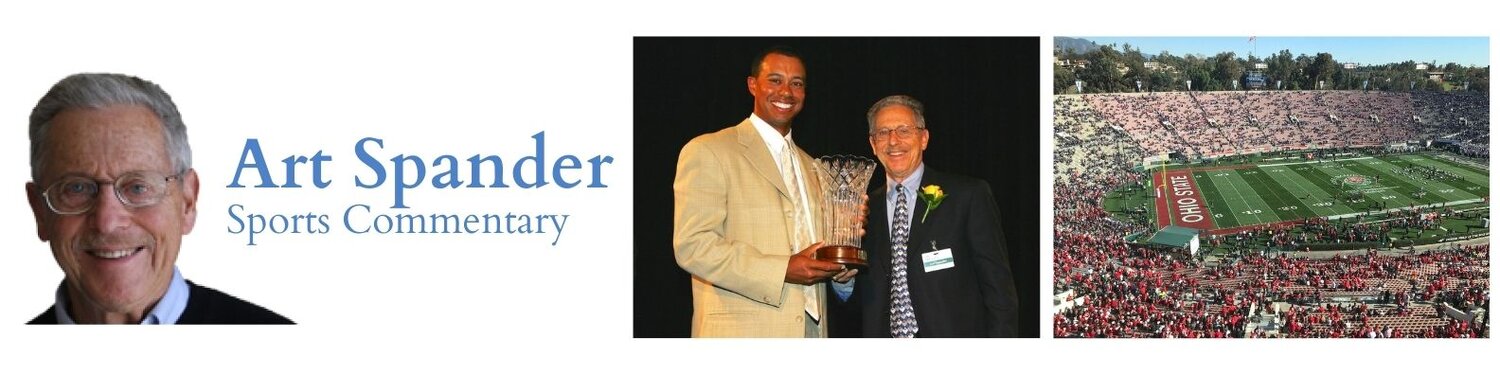
As a reporter since 1960, Art Spander is a living treasure of sports history. A recipient of the Dick McCann Memorial Award -- given for his long and distinguished career covering professional football -- he has earned himself a spot in the Pro Football Hall of Fame. And he has recently been honored with the Lifetime Achievement Award by the PGA of America for 2009.
- - - - - -
http://www.realclearsports.com/articles/2009/04/draft-too-compelling-to-be-ignored.html
© RealClearSports 2009
© RealClearSports 2009